Increased E-commerce Online Foot Traffic and Sales

UX/UI Designer
Parties
Townhall Coins Owner
Townhall Coins Assistant
Front End Developer
Tools
Figma
Miro
Shopify
Duration
Dec 2024- Mar 2025
Introduction
Town Hall Coins & Collectables is a specialist coin shop in Sydney’s CBD. The business has over 30 years of reputation with serious collectors who travel to visit them in store, but the business experienced low foot traffic online. With the increase of customers turning to online shopping, the website could no longer be an afterthought. This freelance project was to redesign the site end to end, bringing in new customers, problem solving current pain points, and increasing online foot traffic.
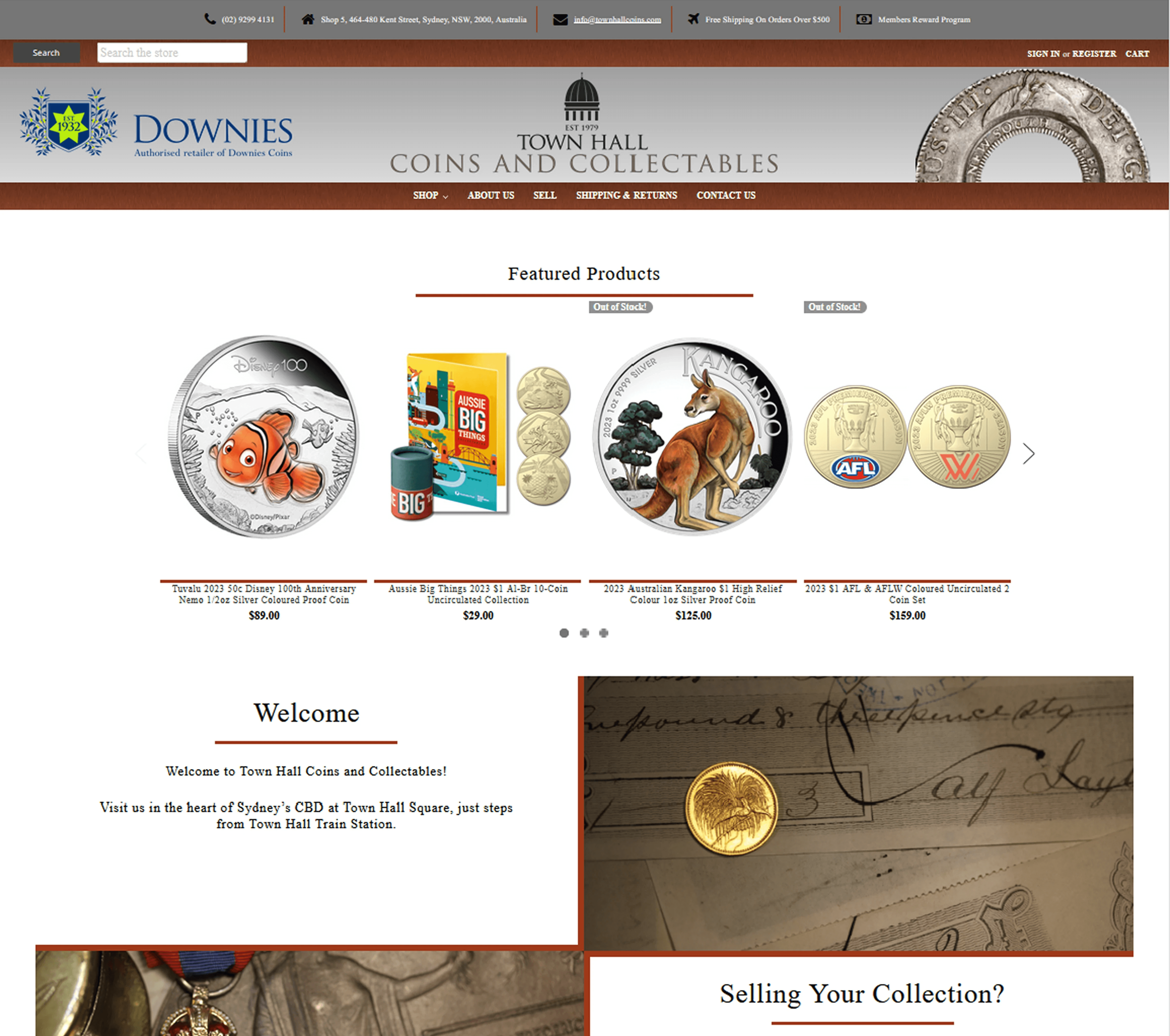
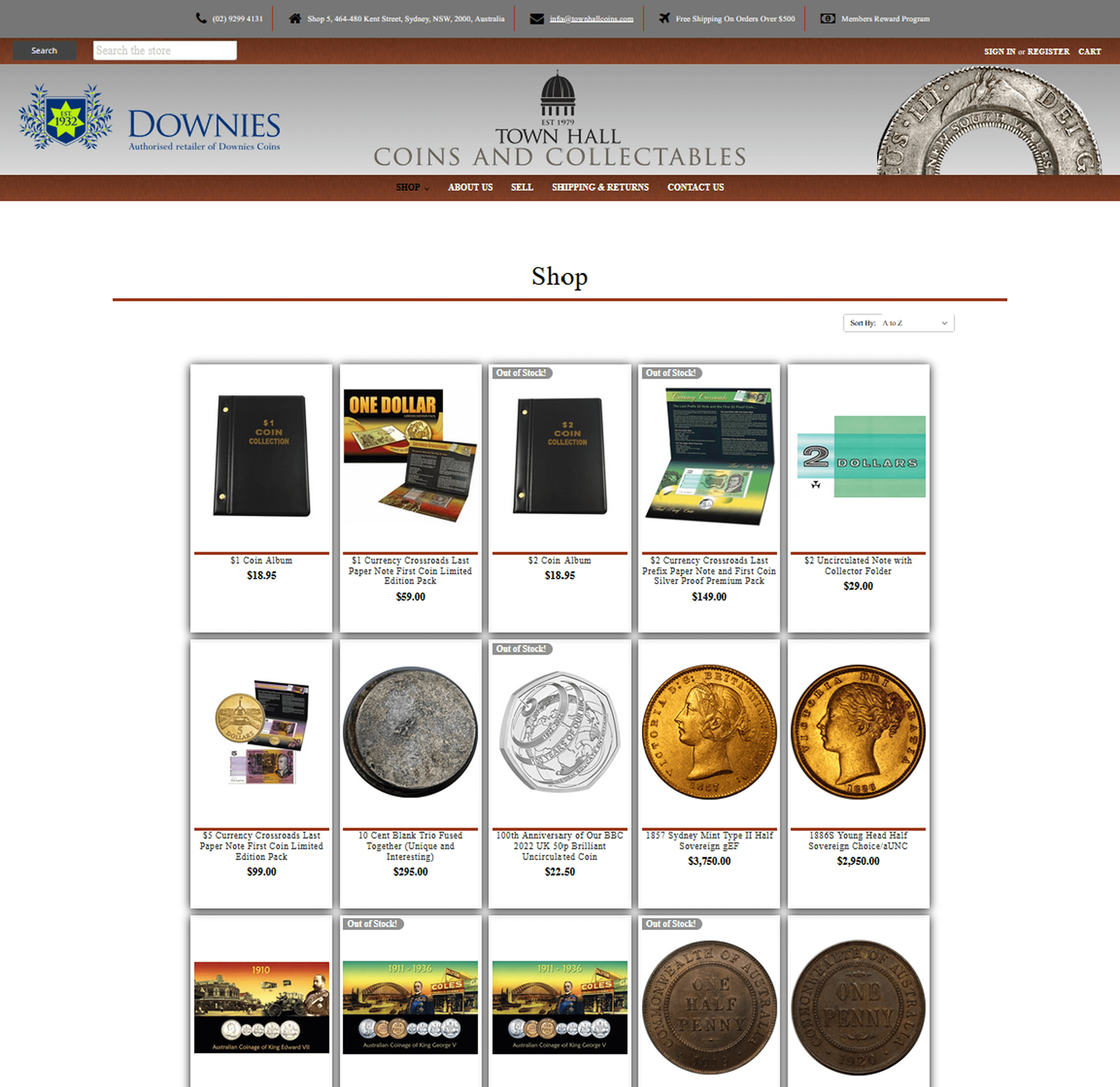
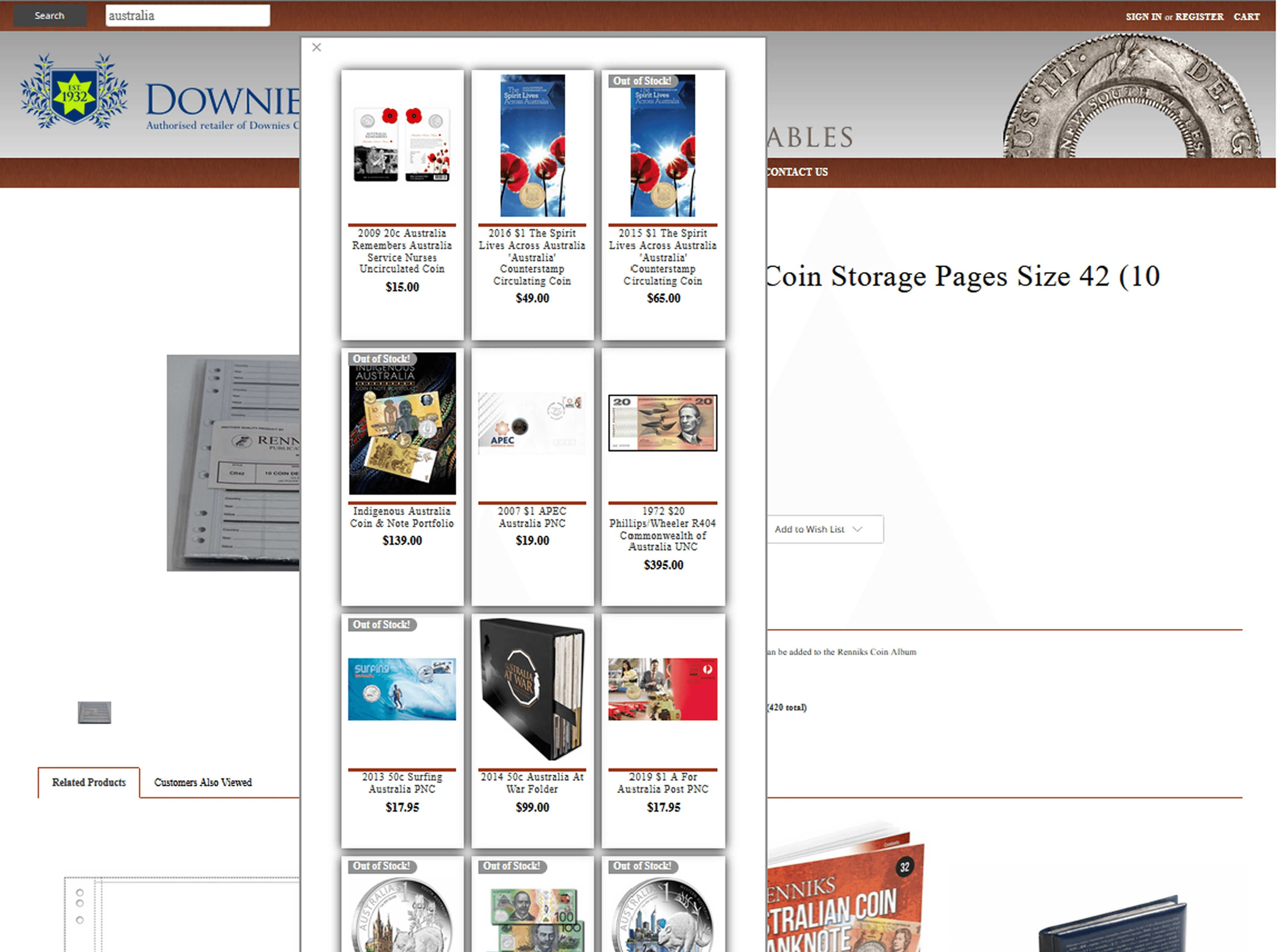
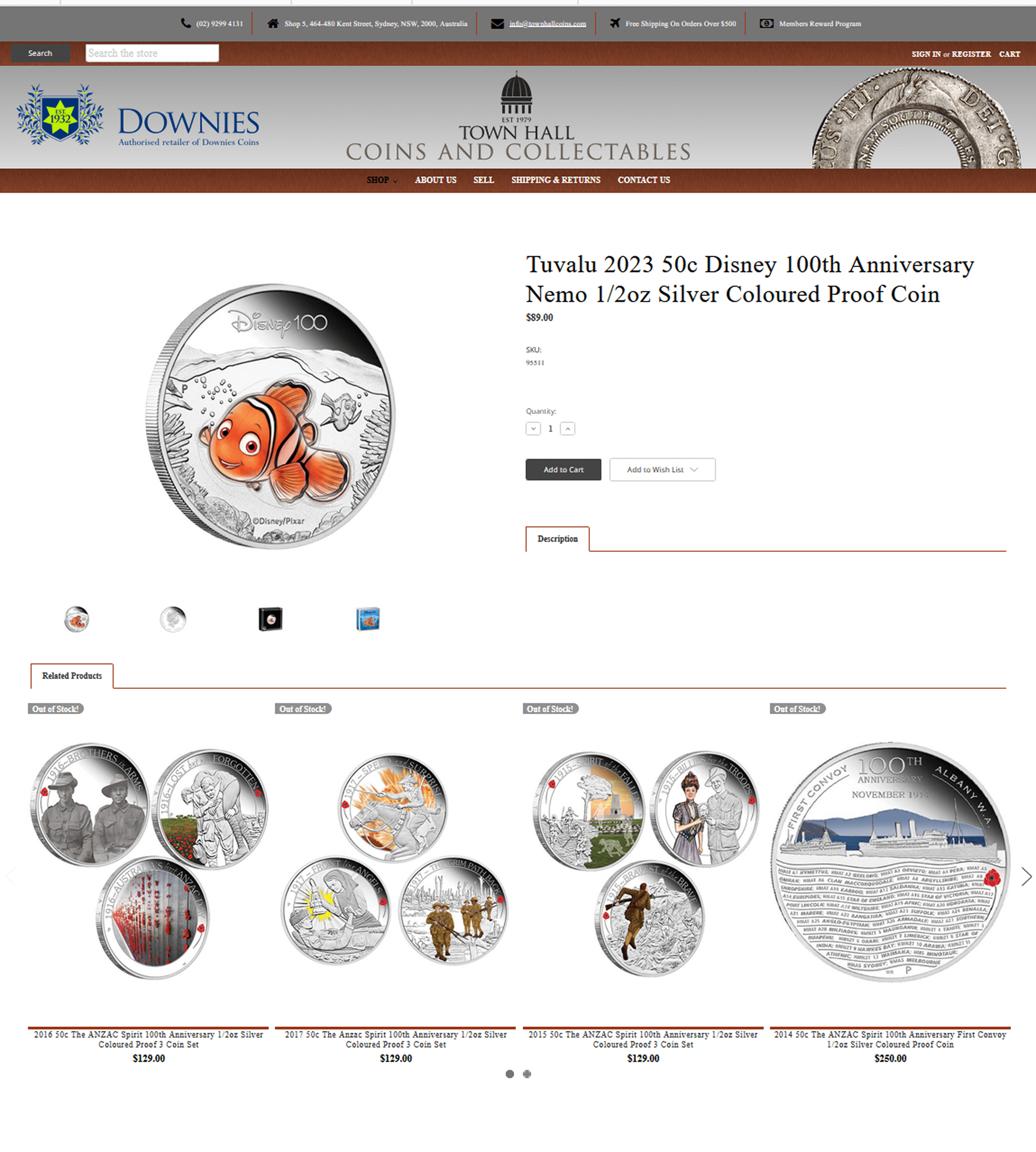
Screenshots of the old website featuring the home page, shop all, search and product page.
Discovery and Audit
In this information gathering stage I had structured conversations with the client to understand their business, customers, competitors, and the current state of the website.
The clients existing consumer base were on average older than the typical consumer and had specified difficulty navigating through different sections of the website. They expressed frustrations over browsing through products, as the search function lacked filtering and only accommodated with a generic sort feature.
Customers resorted to going in store rather than using the client's website to purchase goods. A clear lack of hierarchy on pages left users struggling to find consistency and ultimately was driving online business away from the client and towards their competitors.
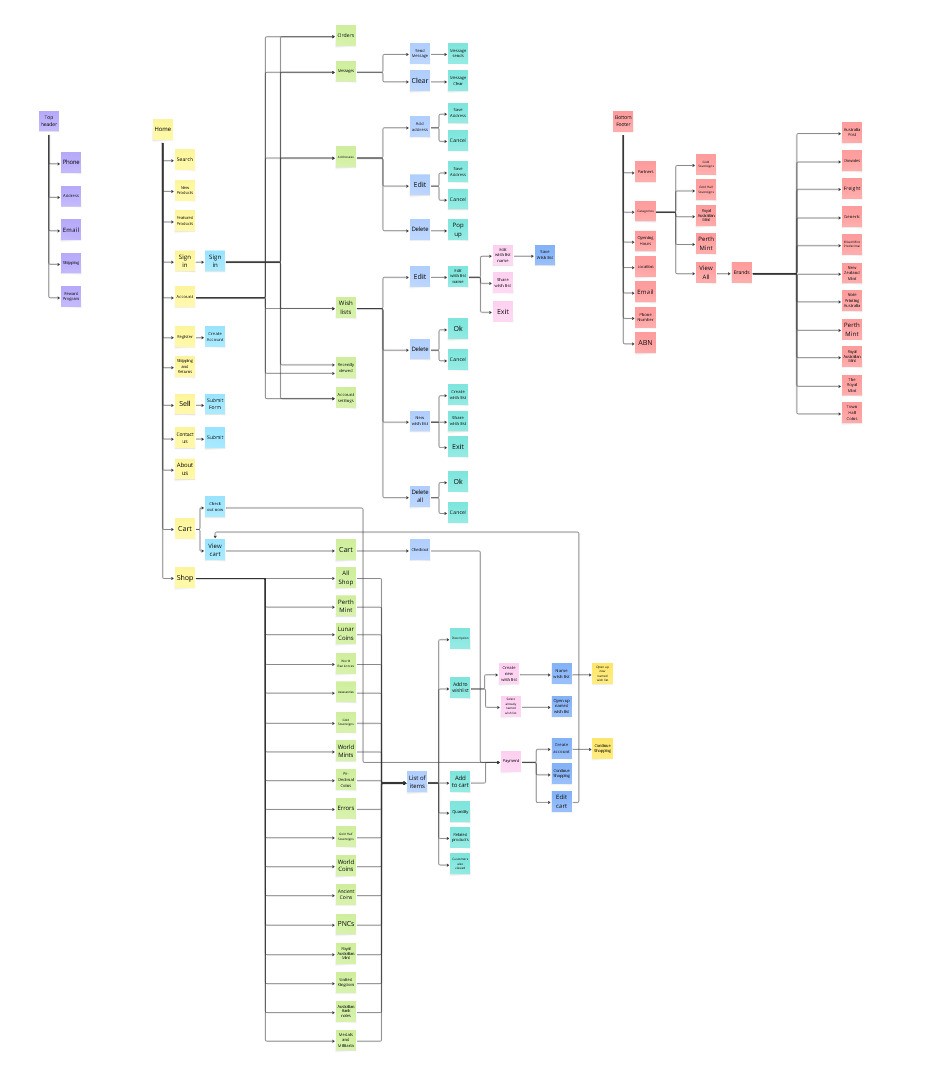
Information Architecture of the previous website.
Aims
The Discovery and Audit revealed three distinct weaknesses:
Customers were not using the site. Even if they tried, they left.
Customers had trouble navigating through the site causing frustration as they could not find what they were looking for.
The businesses online brand presence was weak compared to their competitors.
These issues create the aims of capturing a younger more tech-literate consumer base, building a strong identifiable branding, and transforming the navigation of the website.
Key Design Decisions
Four decisions with the most direct impact:
Simple and easy UI
Simplifying the UI where products were easily seen and introduced clearly. Not over complicating the UI to avoid users feeling overwhelmed or confused. Simple layouts with minimal jargon for older customers.
Stronger Branding
Having a personal and identifiable brand that differentiates them from their competitors. This branding is more memorable for new customers, and creates a new impression of a refreshed business with existing customers.
Clear Navigation
Making the navigation more obvious, less clicks to find a product and less entry points that go to the same page.
Prioritising Accessibility
Colour and contrast, combination through WCAG AA contrast checks before committing to the palette. Picking a readable font.
The Make Up
With a clear brief established, I moved into designing low, medium, and high fidelity wireframes. Before committing to a direction, I consulted with the developer to understand the constraints of the Shopify platform, as its customisation options can be restrictive. I communicated these limitations to the owner and shop assistant early, and we worked collaboratively to find solutions that balanced technical feasibility with their needs.
A core focus of the redesign was improving navigation and findability. The menu filter and search function were both redesigned to make browsing more intuitive, particularly for the older, less tech-savvy customer base identified in discovery.
Three homepage layout concepts were explored:
Concept 1 introduced a dynamic scroll-based layout to surface featured and new products. While visually engaging, it placed a welcome section above the fold, requiring users to scroll before reaching any products. For a customer base less familiar with scrolling behaviour, this added unnecessary friction and risked losing them before they reached what they came for.
Concept 2 offered a more editorial layout well-suited to showcasing selected products. However, it limited how many items the owner could feature prominently, and new arrivals were positioned low enough on the page that many users may never reach them. The risk of customers getting stuck navigating from a limited featured selection — rather than discovering the full range — made this less viable.
Concept 3 was the direction I progressed with. A clean, straightforward layout that removed jargon and unnecessary visual complexity, letting customers reach products quickly. It also addressed a key business requirement of the owner being able to manage the site themselves without ongoing developer support. This layout was the least intimidating to maintain, allowed more products to be visible upfront, and gave the owner greater control over what to surface.

Option 1

Option 2

Option 3

The Redesign
The final design uses a dark navy and gold colour system from the existing brand. The homepage flows through six zones each with a single job: hero establishes identity, trust bar reduces anxiety, featured products show depth, buyback surfaces the two-sided offer, and new arrivals create recency.
The final UI required some adjustments from the original design due to Shopify's layout and customisation limitations, though the core changes and new direction remained.
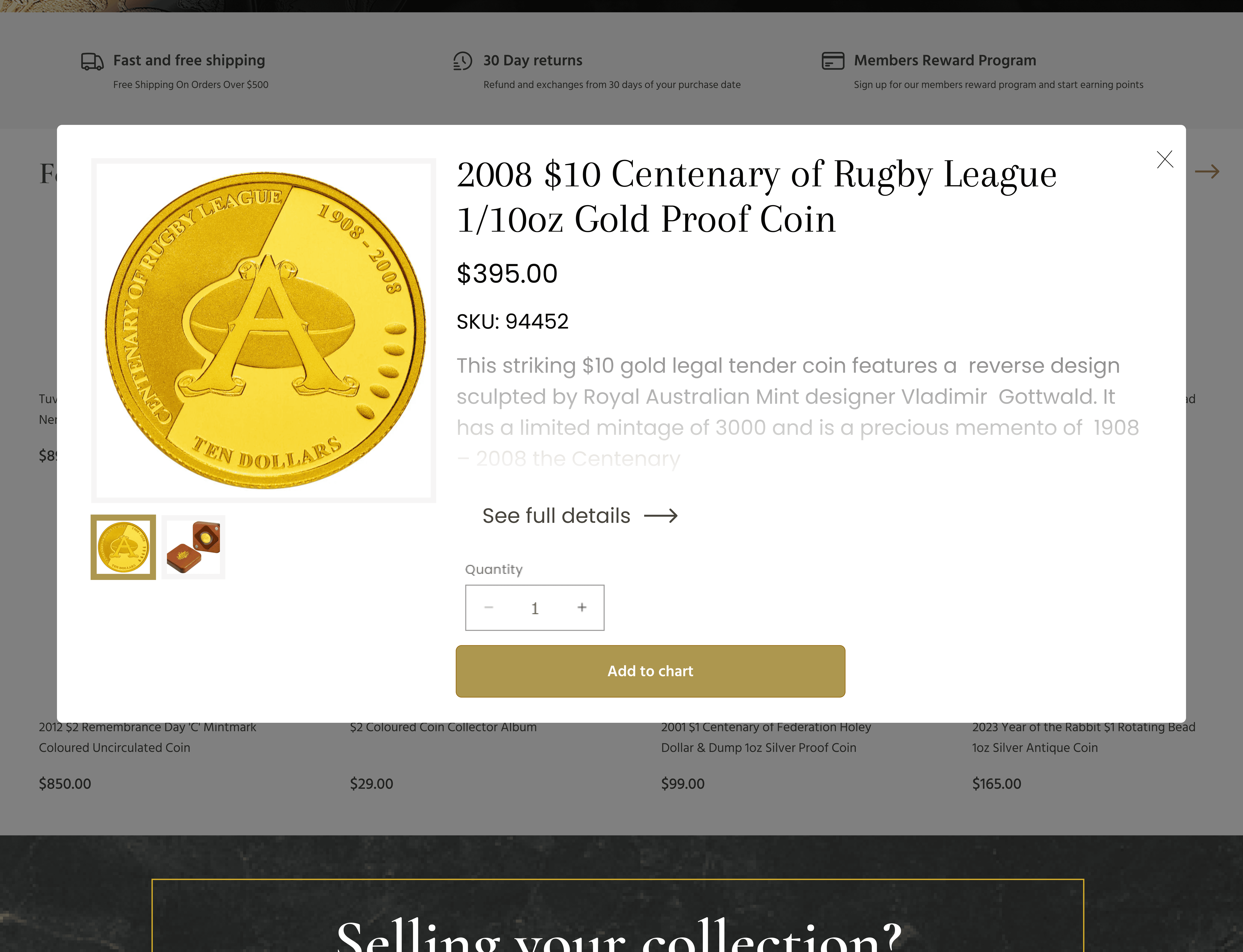
Product cards were standardised with the same structure across every card regardless of product type, clear stock badges, grading certification labels, and a series identifier so collectors can scan quickly.

On the left is the old website's home page, on the right is the new redesign of the home page.
Results
Following the launch, the client reported a significant uplift in online visibility and a 3x increase in orders, with customers independently praising the new site for being easy to navigate. This direct reflection of the design decisions made throughout the process is always the most rewarding end to a project.
Increased E-commerce Online Foot Traffic and Sales
UX/UI Designer
Parties
Townhall Coins Owner
Townhall Coins Assistant
Front End Developer
Tools
Figma
Miro
Shopify
Duration
Dec 2024- Mar 2025
Introduction
Town Hall Coins & Collectables is a specialist coin shop in Sydney’s CBD. The business has over 30 years of reputation with serious collectors who travel to visit them in store, but the business experienced low foot traffic online. With the increase of customers turning to online shopping, the website could no longer be an afterthought. This freelance project was to redesign the site end to end, bringing in new customers, problem solving current pain points, and increasing online foot traffic.
Discovery and Audit
In this information gathering stage I had structured conversations with the client to understand their business, customers, competitors, and the current state of the website.
The clients existing consumer base were on average older than the typical consumer and had specified difficulty navigating through different sections of the website. They expressed frustrations over browsing through products, as the search function lacked filtering and only accommodated with a generic sort feature.
Customers resorted to going in store rather than using the client's website to purchase goods. A clear lack of hierarchy on pages left users struggling to find consistency and ultimately was driving online business away from the client and towards their competitors.
Information Architecture of the previous website.
Aims
The Discovery and Audit revealed three distinct weaknesses:
Customers were not using the site. Even if they tried, they left.
Customers had trouble navigating through the site causing frustration as they could not find what they were looking for.
The businesses online brand presence was weak compared to their competitors.
These issues create the aims of capturing a younger more tech-literate consumer base, building a strong identifiable branding, and transforming the navigation of the website.
Key Design Decisions
Four decisions with the most direct impact:
Simple and easy UI
Simplifying the UI where products were easily seen and introduced clearly. Not over complicating the UI to avoid users feeling overwhelmed or confused. Simple layouts with minimal jargon for older customers.
Stronger Branding
Having a personal and identifiable brand that differentiates them from their competitors. This branding is more memorable for new customers, and creates a new impression of a refreshed business with existing customers.
Clear Navigation
Making the navigation more obvious, less clicks to find a product and less entry points that go to the same page.
Prioritising Accessibility
Colour and contrast, combination through WCAG AA contrast checks before committing to the palette. Picking a readable font.
The Make Up
With a clear brief established, I moved into designing low, medium, and high fidelity wireframes. Before committing to a direction, I consulted with the developer to understand the constraints of the Shopify platform, as its customisation options can be restrictive. I communicated these limitations to the owner and shop assistant early, and we worked collaboratively to find solutions that balanced technical feasibility with their needs.
A core focus of the redesign was improving navigation and findability. The menu filter and search function were both redesigned to make browsing more intuitive, particularly for the older, less tech-savvy customer base identified in discovery.
Three homepage layout concepts were explored:
Concept 1 introduced a dynamic scroll-based layout to surface featured and new products. While visually engaging, it placed a welcome section above the fold, requiring users to scroll before reaching any products. For a customer base less familiar with scrolling behaviour, this added unnecessary friction and risked losing them before they reached what they came for.
Concept 2 offered a more editorial layout well-suited to showcasing selected products. However, it limited how many items the owner could feature prominently, and new arrivals were positioned low enough on the page that many users may never reach them. The risk of customers getting stuck navigating from a limited featured selection rather than discovering the full range made this less viable.
Concept 3 was the direction I progressed with. A clean, straightforward layout that removed jargon and unnecessary visual complexity, letting customers reach products quickly. It also addressed a key business requirement of the owner being able to manage the site themselves without ongoing developer support. This layout was the least intimidating to maintain, allowed more products to be visible upfront, and gave the owner greater control over what to surface.
Option 1
Option 2
Option 3
Option 3 (refined)
The Redesign
The final design uses a dark navy and gold colour system from the existing brand. The homepage flows through six zones each with a single job: hero establishes identity, trust bar reduces anxiety, featured products show depth, buyback surfaces the two-sided offer, and new arrivals create recency.
The final UI required some adjustments from the original design due to Shopify's layout and customisation limitations, though the core changes and new direction remained.
Product cards were standardised with the same structure across every card regardless of product type, clear stock badges, grading certification labels, and a series identifier so collectors can scan quickly.
On the left is the old website's home page, on the right is the new redesign of the home page.


Results
Following the launch, the client reported a significant uplift in online visibility and a 3x increase in orders, with customers independently praising the new site for being easy to navigate. This direct reflection of the design decisions made throughout the process is always the most rewarding end to a project.